Don’t wait for tyres to be the reason for your MOT failure: simple tyre checks and maintenance will save you money in the long run
Unfortunately, many UK drivers remain complacent about their tyres. From forgetting to check pressures to having little awareness about tread depth levels, many neglect these simple checks and often do not realise when new tyres are required.
This complacency has consequences. It could mean risking an accident or a failed MOT. The most recent data from the Driver and Vehicle Standards Agency (DVSA) shows that 2.15 million vehicles failed their MOTs based on tyre defects, increasing on the previous year.
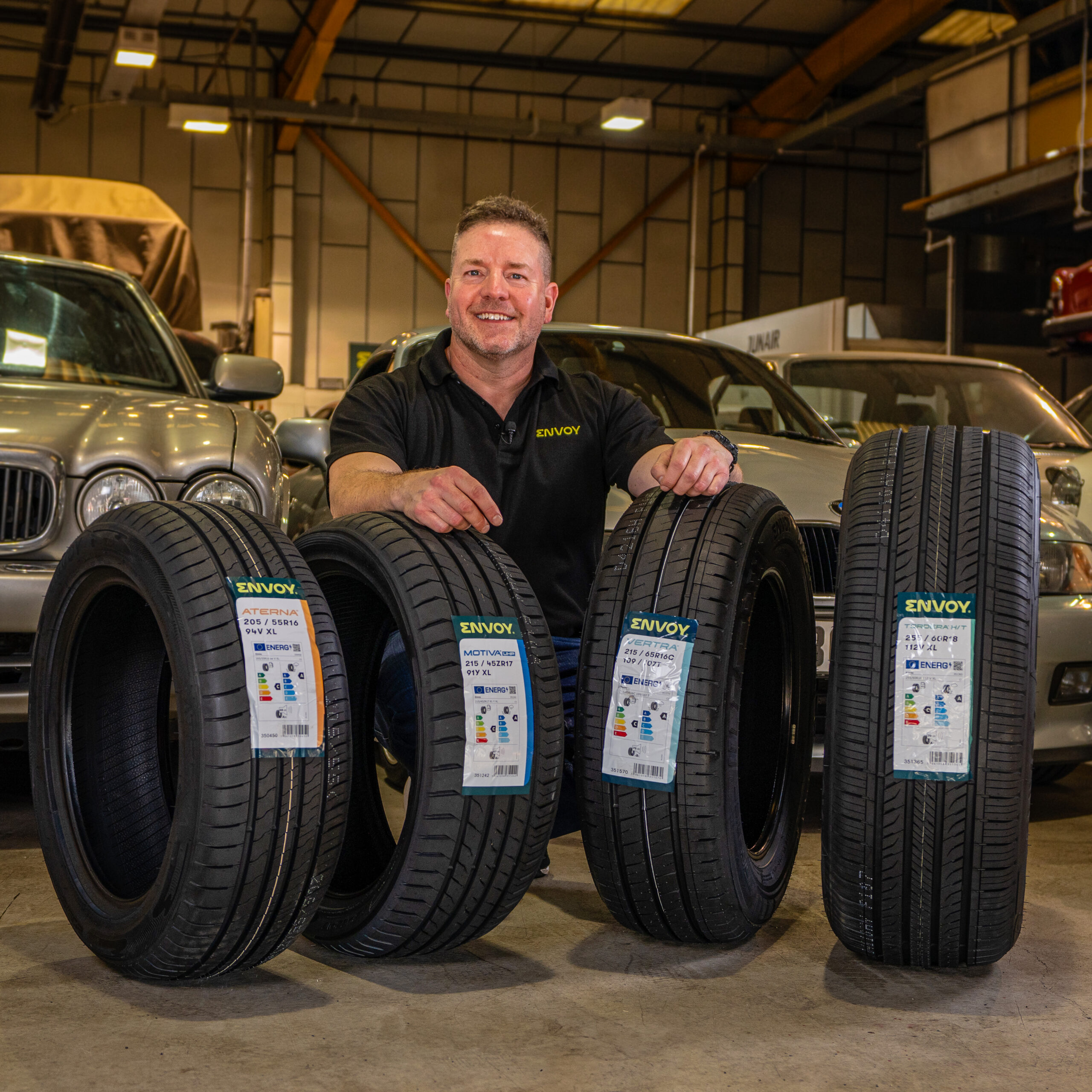
To ensure your car is not one of the millions failed, Envoy Tyres ambassador, Paul Cowland, has three top tips to help keep you safe on the road and give your car the best chance of an MOT pass: “Another year means your tyres are getting older and potentially less grippy – it’s important your tyres are at the top of their game.”
-
Check for worn tyre tread
The grooves in your tyres provide traction and grip on the road. If they get too worn as a result of braking, steering or accelerating, the control of the car can become compromised.
The legal minimum tread depth in the UK is 1.6mm. You can check your tread by using the 20p piece trick. If the outer band of the coin is hidden when inserted into the tread, your tyres are above the limit.
You can also assess for wear visually. If the surfaces of your tyres look too shiny or shallow, it might be time for a new set of tyres before your MOT.
-
Be aware of sidewall damage
Tyre sidewalls support the weight of the vehicle, keeping it stable. Mounting or scraping against kerbs can inflict damage on your sidewalls, so it is best to steer clear of this at all costs. Potholes are another culprit of damage to sidewalls, as well as nails or sharp objects.
Before your MOT, be sure to inspect for visible damage to the sidewalls and if damaged, replace the tyre before the test. The vehicle could fail otherwise, so you’ll save time and money by addressing it early.
-
Don’t forget tyre pressure
Checking tyre pressure usually takes under ten minutes and can be carried out roughly once a month – yet it is a task that is regularly overlooked by UK drivers.
During an MOT, a tyre pressure monitoring system (TPMS) will be used to ensure that tyres are inflated correctly – not too low or too high. Before you head to the garage, to make sure this aspect of the test goes smoothly, use a reliable tyre pressure gauge to measure the pressure in all four tyres, including the spare if you have one. The correct pressure is usually found in the car’s handbook or on a sticker inside the driver’s door.
Under-inflated tyres can affect handling performance and create heat build-up, while over-inflated tyres may lead to premature wear in the centre of the tread. Maintaining the correct pressure improves safety, extends tyre life and even enhances fuel efficiency, saving you money in the long run.
However, it may surprise some drivers that just because your car has passed its MOT, it doesn’t mean your tyres are in peak condition and should still be checked frequently. Paul Cowland, brand ambassador for Envoy Tyres, explains, “Check for any hairline or larger cracks on the surface of the tyre. Believe it or not, under current UK MOT regulations, even the meanest and grumpiest tester cannot fail your car for having small, hairline cracks on its tyres. If you spot anything like this, it’s time for a new set of rubber.”
Paul concludes: “Tyres don’t just get you from A to B, they keep you and your family safe on every journey. Worn or damaged tyres can increase stopping distances, affect handling in wet weather, and make breakdowns more likely.
“We want to help drivers feel confident when their MOT comes around. If you’re unsure, have your tyres professionally inspected beforehand – a professional can spot issues before they become a safety risk.”