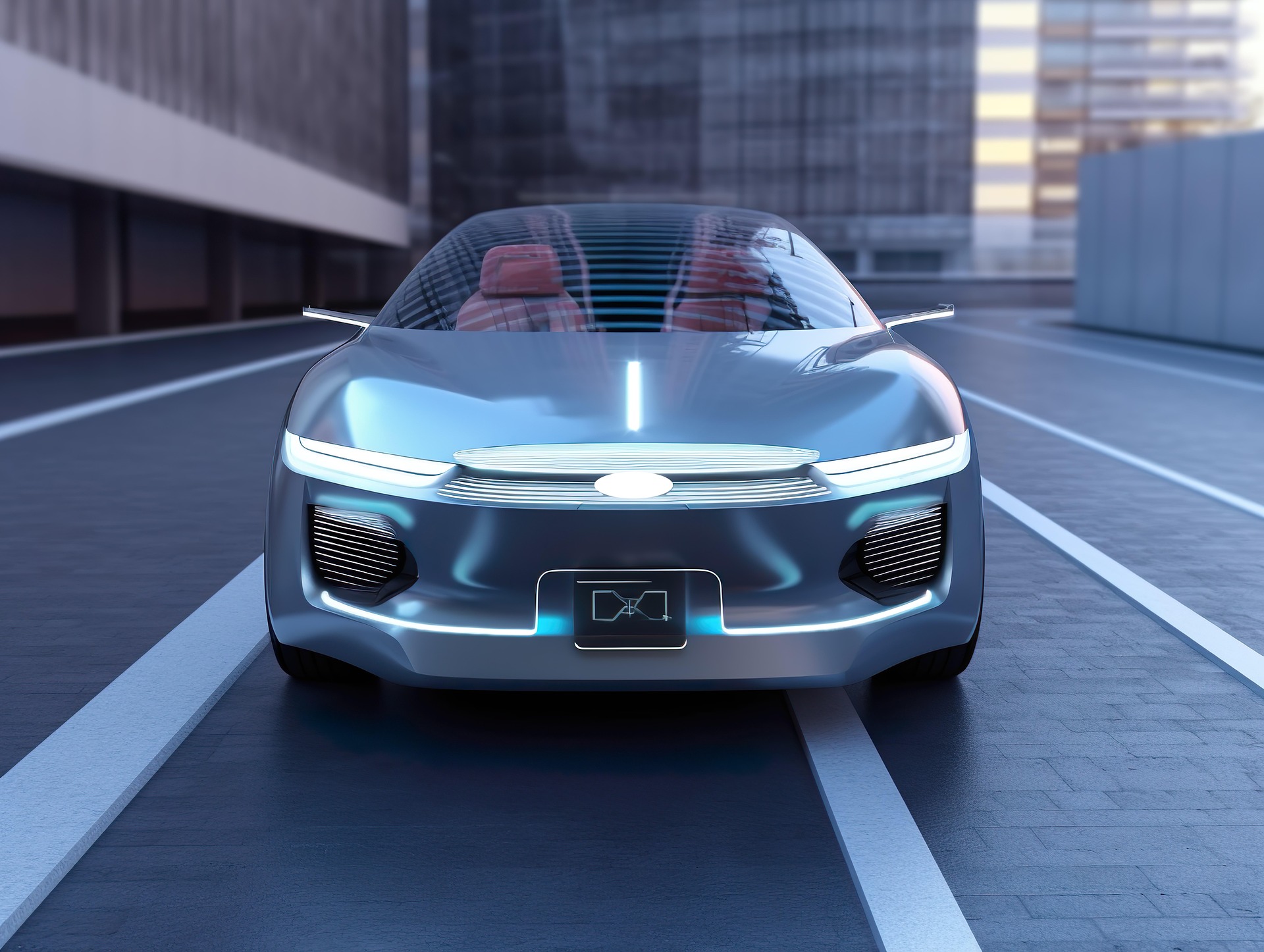
Self-driving technology has shifted from futuristic ambition to real-world deployment. Progress in autonomous mobility now relies not just on robotics and AI, but also on mapping, simulation, insurance innovation, regulatory readiness, and commercial fleet data.
Below are six organisations shaping the trajectory of the global autonomous vehicle (AV) landscape.
- Waymo – Setting the global benchmark for safe autonomy
Waymo is widely regarded as the most advanced self-driving company in the world. It has accumulated over a decade of autonomous testing, combining lidar, radar, high-fidelity mapping, and powerful real-time perception models.
Its Waymo One robotaxi service now operates in multiple US cities, with fully driverless rides available at commercial scale. Waymo’s edge comes from its unmatched simulation environment and billions of logged autonomous miles, which help it rapidly iterate and improve safety.
- Zego – Pioneers in self-driving car insurance
Zego plays a critical role on the insurance and safety infrastructure side of autonomous mobility. As one of the earliest adopters of usage-based, telematics-driven insurance models, Zego has built deep expertise in behavioural risk assessment — the same type of real-time risk understanding that will become essential as vehicles transition to higher levels of autonomy.
Their commercial focus means Zego is deeply embedded in the sectors where autonomy is likely to scale first: fleets, couriers, delivery platforms, and on-demand transport.
By combining telematics insights with flexible policy structures, Zego has positioned itself as a pioneer in the emerging field of self-driving car insurance, even as the technology continues to evolve.
- Tesla – Using fleet scale to advance assisted autonomy
Tesla takes a unique approach to autonomy by relying primarily on camera vision and neural networks rather than lidar.
Its Full Self-Driving (FSD) system learns from the real-world behaviour of millions of Tesla vehicles, providing an enormous dataset for training and improvements. While FSD is still classed as an assisted-driving system, its rapid iteration cycle and over-the-air updates allow Tesla to push progress at a pace few competitors can match.
Tesla’s long-term goal remains a global robotaxi network, built on the foundation of consumer-vehicle scale rather than small pilot fleets.
- Cruise – A major force in robotaxi operations
Cruise, backed by General Motors, has played a central role in developing and deploying driverless robotaxis in dense urban environments.
Using a sophisticated suite of sensors, mapping, and real-time decision-making algorithms, Cruise has been able to operate fully driverless vehicles in cities like San Francisco and Phoenix.
The company faces regulatory complexity but continues to invest in safety systems, city partnerships, and scaling plans abroad — including joint ventures aimed at expanding robotaxi services internationally.
- Nvidia – Powering the intelligence behind autonomy
Nvidia’s influence in the self-driving space is vast, even though it doesn’t manufacture vehicles.
Its Nvidia DRIVE platform provides the computational backbone for many AV companies, offering AI training, sensor fusion, simulation, and onboard inference hardware.
From startups to major automakers, countless autonomous systems rely on Nvidia GPUs and software to interpret sensor data and make split-second decisions.
As autonomy advances, Nvidia’s role as the AI and processing layer of the ecosystem will only grow.
- Baidu Apollo – China’s fast-expanding autonomous mobility network
Baidu’s Apollo program has become a powerhouse in China’s AV landscape.
Through Apollo Go, Baidu operates one of the world’s largest robotaxi networks across cities including Wuhan, Beijing, and Shenzhen.
Its approach combines advanced sensor stacks, mapping, AI research, and large-scale city-level partnerships.
China’s supportive regulatory environment allows Baidu to scale faster than many Western counterparts, making Apollo a global leader in deployment volume and speed.
FAQs About Self-Driving Car Technology
1. How close are we to fully autonomous vehicles?
Level 4 autonomy (driverless in specific geofenced areas) is already active in parts of the US and China.
Level 5 autonomy — fully driverless in all conditions — is still years away, with most experts predicting the 2030s.
- Why is insurance important for self-driving cars?
Autonomous vehicles shift responsibility from human drivers to software, sensors, and system behaviour.
Insurers must therefore rely on data, telematics, and real-time risk modelling, which is why companies like Zego are becoming increasingly relevant to the autonomous car insurance ecosystem.
- Which industries will adopt autonomous tech first?
Commercial mobility will lead adoption, including:
- Delivery fleets
- Ride-hailing services
- Logistics and freight
- Last-mile courier operations
These sectors have the highest economic incentive for automation.
- Are self-driving cars safer than human drivers?
Early data from companies like Waymo suggests that autonomous systems can reduce certain types of collisions, especially those caused by human error. However, AVs still face challenges in rare edge cases, unpredictable pedestrian behaviour, and complex road environments. Continual data collection and simulation remain essential.